
A groom’s voice may shake on the first line. A parent may quietly wipe away tears in the front row. The couple may pause, laugh, or speak words they wrote only the night before. Knowing how to film wedding vows means preparing for those unscripted moments while making sure the promises themselves are heard, seen, and preserved beautifully.
Wedding vows are not a scene that can be repeated. They happen once, often in changing light, with a live audience, a busy officiant, and plenty of emotion. Great vow coverage comes from thoughtful planning, dependable equipment, and the calm presence of a professional team that knows when to move and when to stay still.
Start With Audio, Not the Camera
A beautiful image cannot rescue a vow recording if the voices are buried beneath wind, traffic, air conditioning, or a guest’s cough. Clear audio is the foundation of a meaningful wedding film, especially during the ceremony.
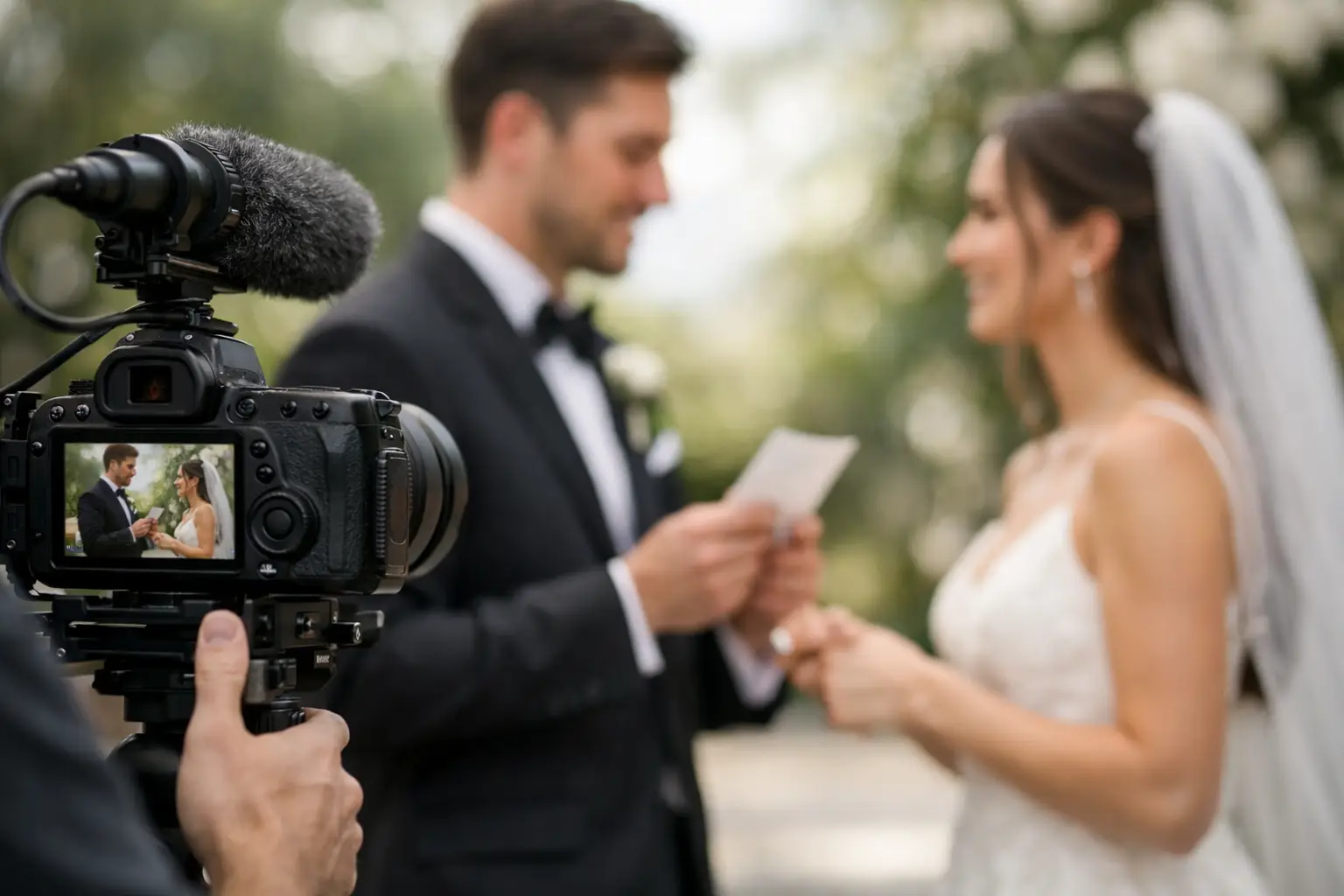
Whenever possible, place a small wireless microphone on the groom or connect a recorder to the officiant’s microphone system. The groom is often the best source because he is close to both partners when they exchange vows. A second audio source on the officiant provides valuable backup and can capture readings, announcements, and the full flow of the ceremony.
Do not rely on a camera’s built-in microphone alone. It can be useful as ambient audio, capturing applause, music, and the natural atmosphere of the day, but it is rarely close enough to record intimate vows with the clarity they deserve. Outdoor weddings in New Jersey, New York, and Pennsylvania can be especially unpredictable. Wind near the shore, passing traffic, birds, and nearby celebrations can all affect the recording.
Before guests arrive, test every microphone, recorder, battery, and memory card. Check levels with someone speaking at a normal ceremony volume, not at a loud rehearsal voice. Then start recording early. A few extra minutes of audio is always better than missing the beginning of a heartfelt promise.
Choose Angles That Feel Personal and Respectful
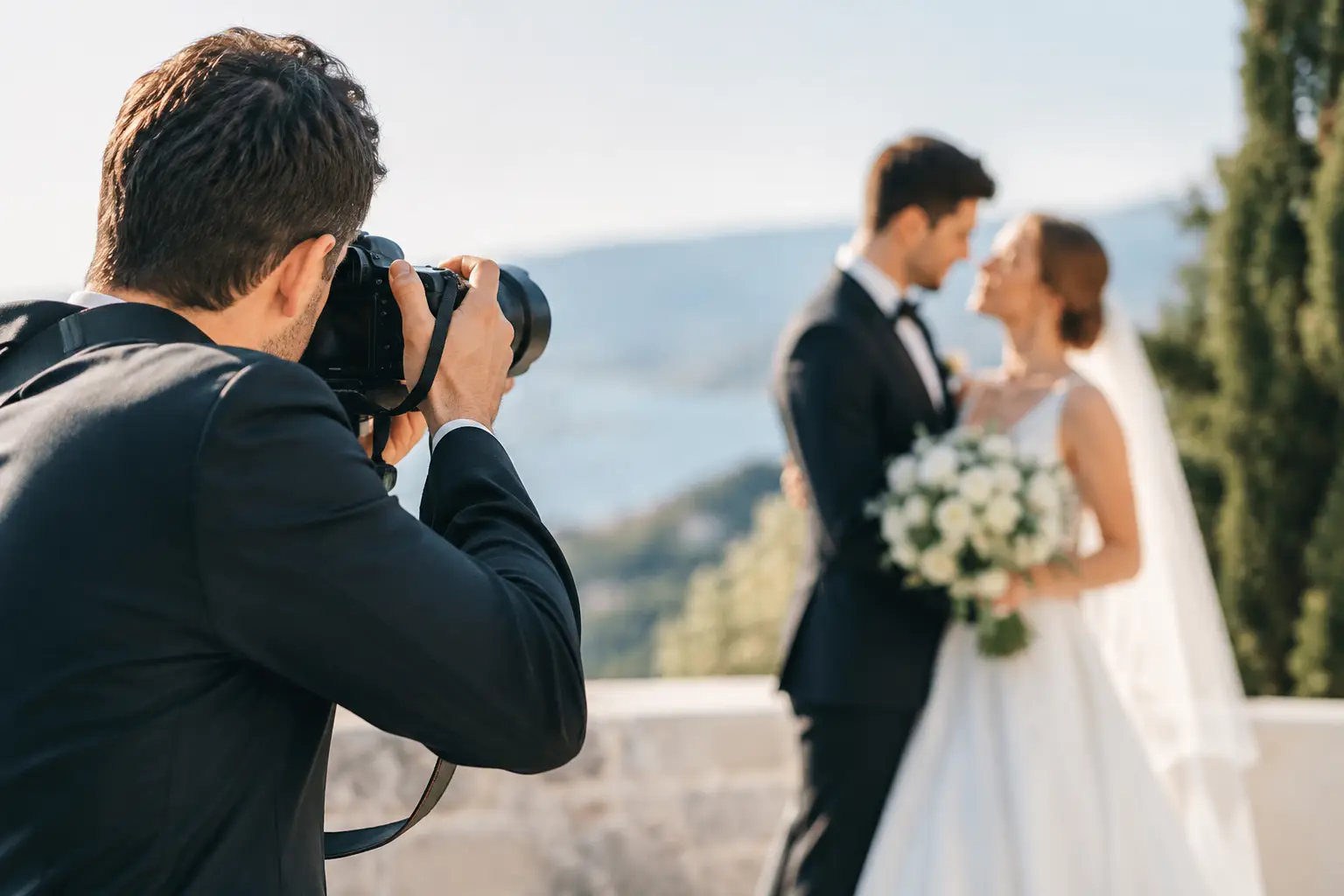
The best wedding vow footage brings viewers close to the couple without becoming a distraction to them or their guests. A primary camera should hold a clean, stable view of the couple, usually from the center aisle or slightly off-center. This is the dependable angle that protects the moment if anything unexpected happens.
A second camera can add emotion and variety. It may capture the bride’s expression as she listens, the groom’s hands holding his vow book, the officiant’s reaction, or a parent watching from the first row. These details make a wedding film feel cinematic because they show how the vows landed in the room, not just how they sounded.
Keep the Main Shot Steady
During vows, avoid unnecessary zooming, frequent repositioning, or dramatic camera movement. The couple is already carrying the emotion. A steady composition lets their words and expressions lead the scene.
Frame the couple from approximately the waist up when possible, leaving enough room to preserve their posture and gestures. This framing captures faces clearly while still showing their hands, attire, and connection. If one partner is significantly taller, adjust the angle before the ceremony begins so neither person feels awkwardly cropped.
Tripods and monopods are especially helpful during ceremonies. Handheld footage can have a natural documentary feel, but vows are not the place to risk distracting shake. Stable footage gives the final film a polished, timeless quality.
Capture Reactions Without Interrupting the Moment
A wedding is full of reactions worth remembering. The bride hearing a surprise line in the groom’s vows, a grandparent smiling through tears, and friends laughing at an inside joke all add depth to the story.
The key is anticipation. Listen closely and watch body language. If a speaker pauses, looks down at their notes, or takes a breath before a personal story, be ready for the reaction that may follow. Capture it from a respectful distance, then return to the couple before the next important line begins.
Plan for the Ceremony Location
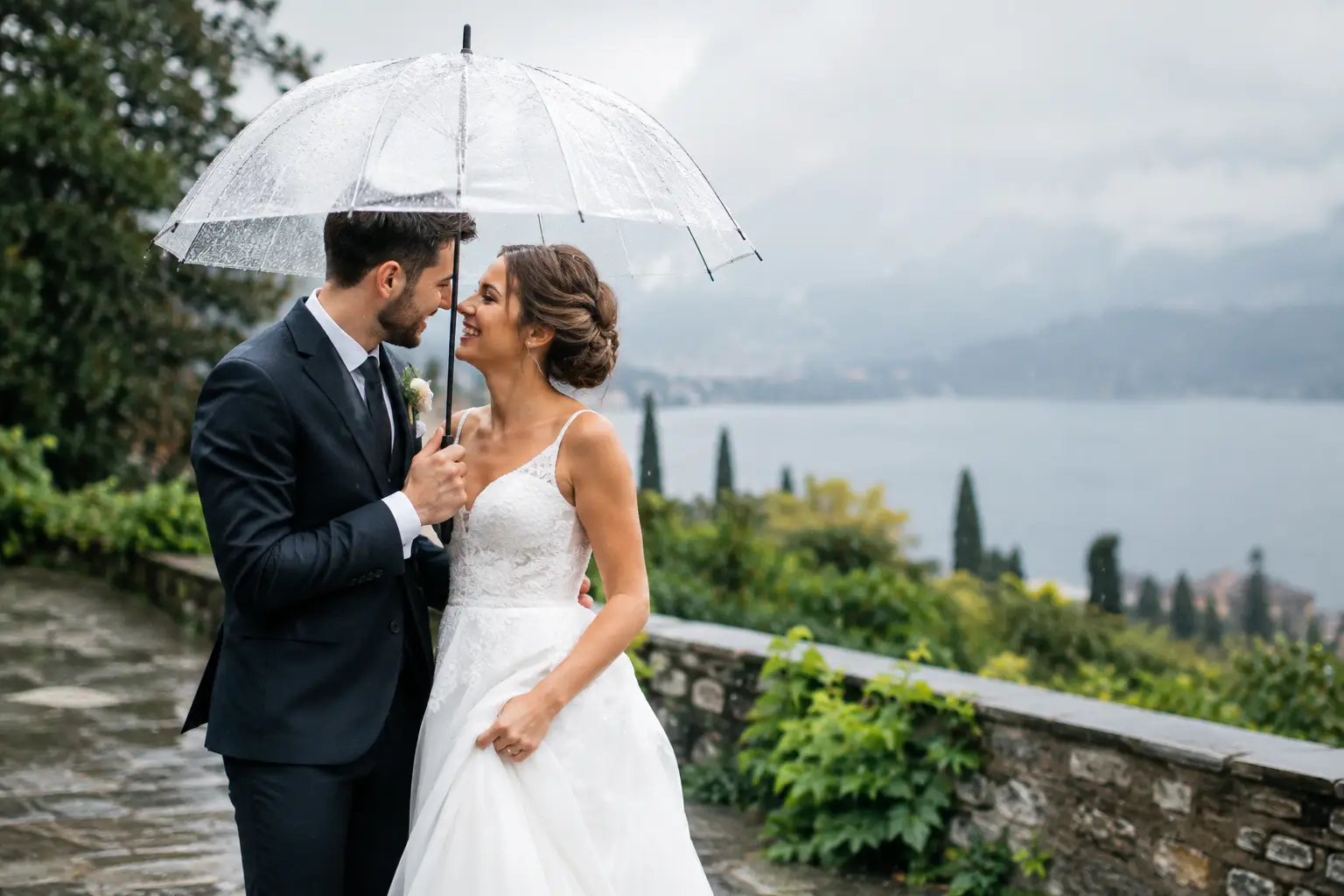
Every venue creates different filming challenges. A dark church may require careful camera settings and fast lenses. A bright garden ceremony may call for exposure adjustments as clouds pass overhead. A waterfront celebration can be gorgeous on film, but wind protection becomes essential for clear sound.
Visit the ceremony site early, or review it carefully during the rehearsal. Identify where the couple will stand, where the officiant will be positioned, how the sun will fall, and where cameras can be placed without blocking guests or appearing in photographs.
Ask the officiant about any filming rules before the wedding day. Some houses of worship limit movement, prohibit cameras beyond a certain point, or request that videographers remain in designated areas. A professional wedding videographer respects those boundaries while still creating the strongest possible coverage.
Lighting deserves special attention. If the ceremony takes place outdoors, avoid placing the main camera directly into harsh sunlight behind the couple unless you have a planned creative setup. Backlighting can look romantic, but it can also leave faces too dark if it is not managed correctly. When the light is difficult, prioritize well-exposed faces over a dramatic background.
How to Film Wedding Vows With More Than One Camera
Two cameras are often the sweet spot for wedding vows. One stays wide and secure, while the other gathers close-ups and reactions. This approach creates a natural edit and provides protection if a guest stands in the aisle, a photographer steps into frame, or a camera has a brief technical issue.
The wide camera should begin rolling before the officiant starts the vow portion and should not stop until the exchange is complete. This is your safety shot. The second camera can move more carefully, looking for close emotional moments without losing awareness of the ceremony’s pacing.
If a third camera is available, position it for a side angle or a focused view of guests. More cameras can be helpful, but only when they are managed well. Too many operators moving around can pull attention away from the couple and make the ceremony feel like a production instead of a personal celebration.
For couples filming with family members or friends, simplicity matters even more. Assign one person to operate a stable main camera and another to monitor sound. Give each person clear instructions: do not stop recording during the vows, do not stand directly in front of guests, and do not change settings mid-sentence unless absolutely necessary.
Record the Atmosphere Around the Words
The vows are the heart of this part of the wedding film, but the surrounding sounds give them life. Record the room settling before the ceremony, the music fading, soft laughter, applause, and the quiet pause after the final promise. These natural sounds help the finished video feel like a memory rather than a collection of clips.
It also helps to gather a few short shots before and after the ceremony: the vow books, hands being held, the wedding rings, guests arriving, and the couple walking back down the aisle. These images give an editor graceful ways to transition into and out of the vows while keeping the words front and center.
Be mindful of music during the final edit. A gentle music bed can support the emotion, but it should never compete with the couple’s voices. Keep music low, allow important pauses to breathe, and let the spoken promises remain the focus.
Build a Backup Plan Before the Day Begins
Wedding days move quickly, and dependable coverage depends on preparation. Bring extra batteries, charged audio recorders, backup memory cards, and more than one microphone when possible. A compact emergency kit with gaffer tape, lens cloths, headphones, and weather protection can solve small problems before they become major ones.
Headphones are particularly important. Looking at audio levels is helpful, but listening for crackling, wind noise, or interference is the only way to know what the recorder is actually capturing. Check the audio again shortly before the ceremony begins, especially after guests have taken their seats and venue sound systems are active.
Professional experience matters most when plans change. Rain may move an outdoor ceremony indoors. A late arrival may shorten setup time. A DJ or officiant may use a different sound system than expected. An experienced photo and video team stays calm, adapts quickly, and protects the memories that cannot be recreated.
At Adorable Times Photography, wedding coverage is built around the moments couples will want to revisit for decades: the nerves before the ceremony, the first look, the vows, the laughter, and the celebration that follows. The goal is always polished, emotional storytelling delivered with dependable service and accessible options for couples throughout New Jersey, New York, and Pennsylvania.
When the vows begin, the best filming choice is often the quietest one: be ready, stay steady, listen closely, and let two people’s promises fill the frame.