
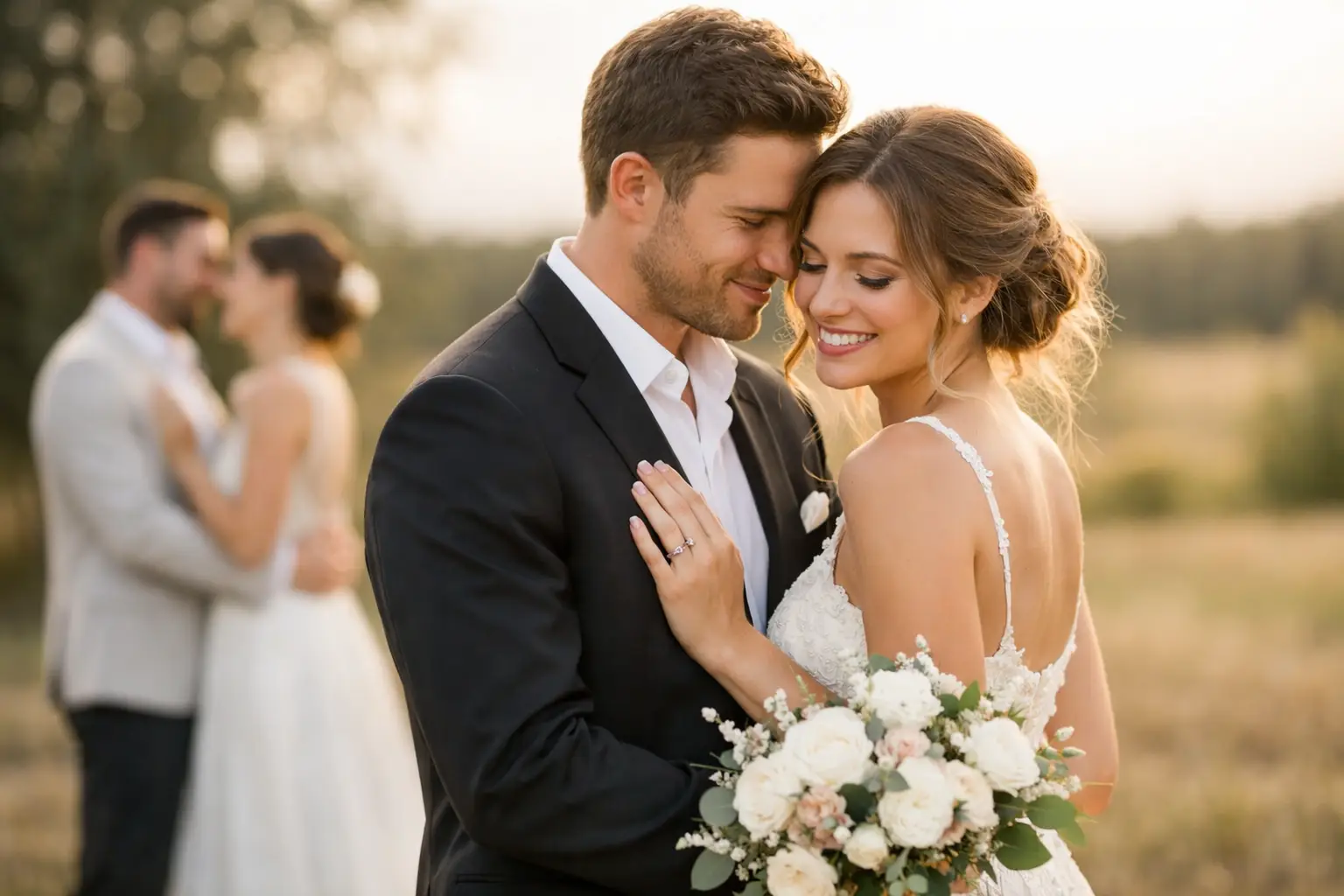
A beautiful wedding portrait rarely begins with a couple who knows exactly what to do with their hands. It begins with calm direction, a little room to breathe, and a photographer who understands how to pose wedding couples without making them look posed. The goal is not to turn two people into models. It is to preserve the way they look at one another on one of the most meaningful days of their lives.
For couples planning a wedding in New Jersey, New York, or Pennsylvania, portraits should feel like a welcome pause in a fast-moving celebration. With the right approach, even couples who say they are awkward in front of the camera can look relaxed, connected, and completely themselves.
Start With Connection, Not a Complicated Pose
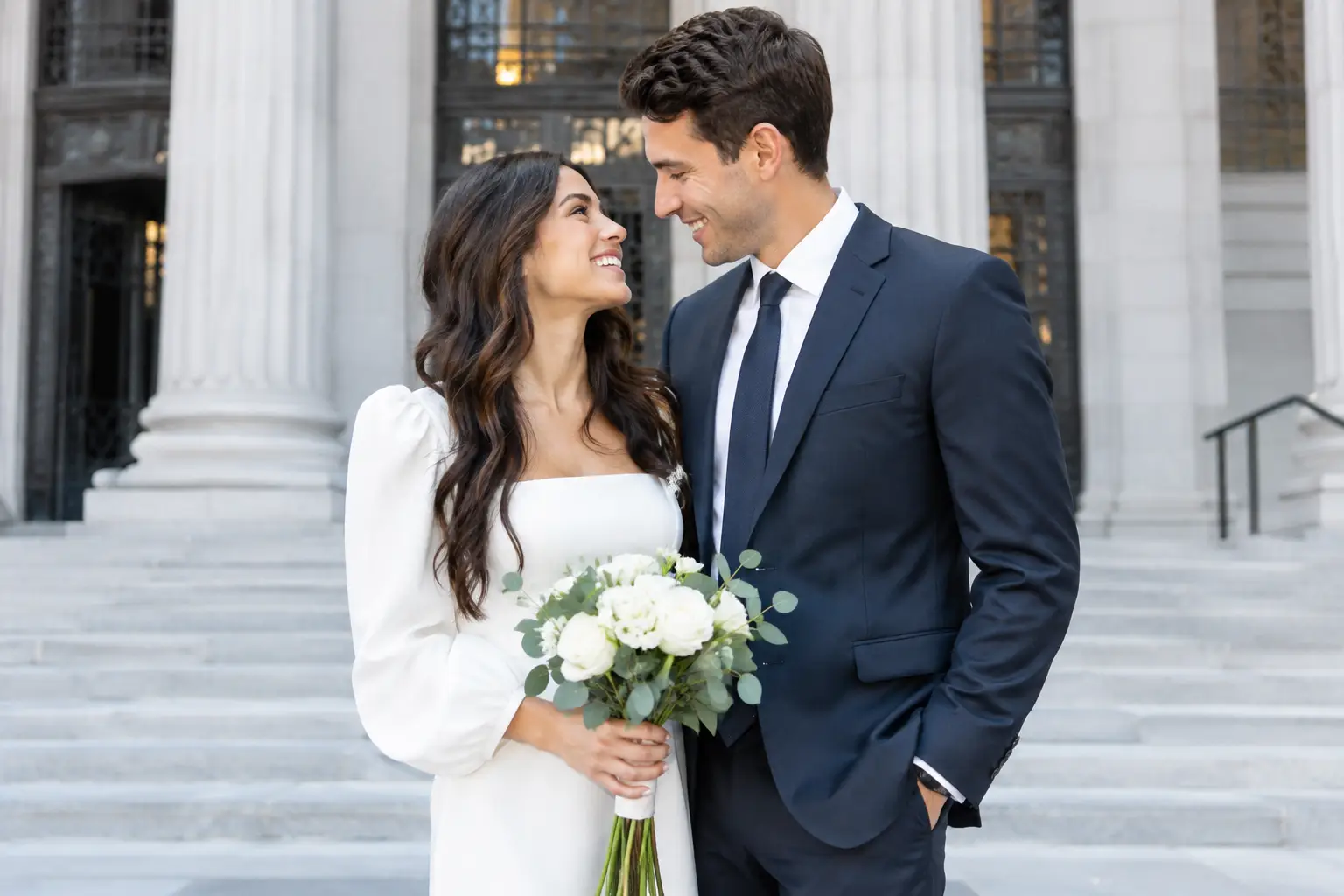
The most flattering wedding poses are built around closeness. Before worrying about hand placement or exact angles, bring the couple together. Ask them to stand chest to chest, hip to hip, or with one partner slightly behind the other. A small amount of physical connection immediately makes a photograph feel warmer and more believable.
Avoid placing both people squarely toward the camera with their arms hanging at their sides. That stance is easy, but it can look stiff and formal. Instead, create a gentle shape: one person turns slightly inward, a hand rests at a waist or lapel, and their faces come close enough that they can speak quietly to each other.
A simple direction such as, “Take a breath, look at each other, and forget I am here for a second,” often does more than a long list of instructions. It gives the couple permission to be present rather than perform.
How to Pose Wedding Couples With Flattering Angles
Every couple is different, so posing should never be one-size-fits-all. Height differences, dress silhouettes, mobility, personality, and the location all affect what will look and feel right. The best pose is one the couple can hold comfortably while still looking natural.
Begin with weight placement. Ask each person to put most of their weight on their back foot or the foot farthest from the camera. This creates a softer posture and prevents locked knees. A slight bend in one knee can add movement, especially with a wedding gown.
Turning bodies about 45 degrees away from the camera is usually more flattering than facing forward. Then bring faces back toward one another or toward the lens. This keeps the portrait dimensional and helps the couple look connected rather than lined up for a school photo.
Hands deserve attention because they reveal nervousness quickly. Give them a purpose. A bride can hold her bouquet naturally at her waist, place a hand on her partner’s chest, or adjust a jacket lapel. A groom can rest a hand at the small of the back, hold hands, or lightly touch the side of a face. Relaxed hands look best when fingers are gently curved rather than spread wide.
Use the Closer-Than-Comfortable Rule
Couples frequently leave more space between themselves than they realize. For photos, ask them to move closer – usually closer than feels necessary at first. Their shoulders can touch, their temples can meet, or one partner can wrap an arm around the other’s waist.
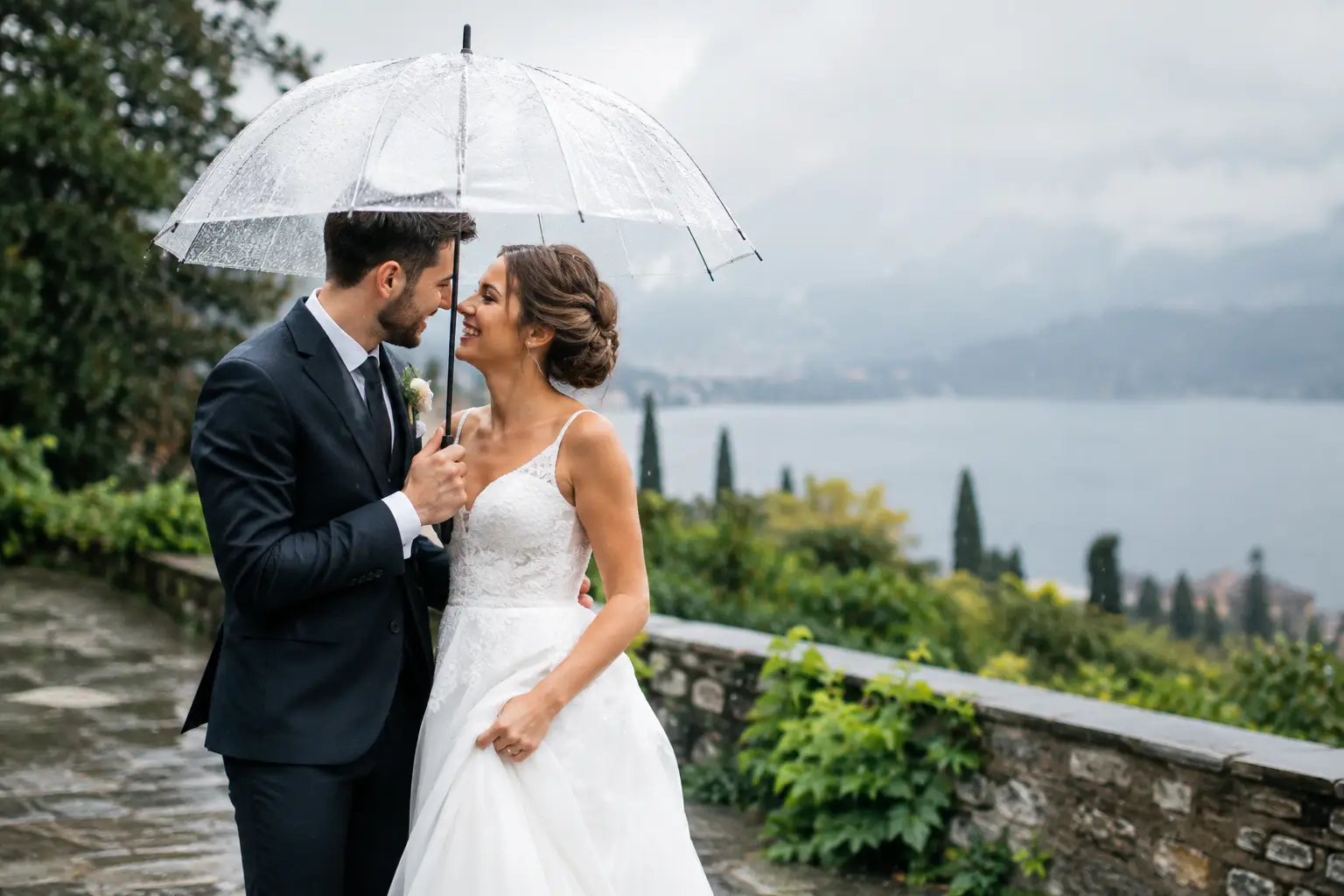
This does not mean every image must be an embrace. A little space can be beautiful in a wide environmental portrait, particularly at a grand New York venue, a waterfront setting in New Jersey, or an open Pennsylvania landscape. But in close portraits, connection is what makes the image feel romantic.
Give Prompts That Create Real Reactions
A pose is the foundation. A prompt is what brings it to life. Once a couple is positioned well, avoid asking them to hold a frozen smile for too long. Give them something small to do together.
Ask one partner to whisper what they were thinking when they first saw the other that day. Invite them to slowly walk hand in hand, stopping when they feel like it. Tell them to bring their foreheads together and take one deep breath. These directions create genuine expressions without forcing a laugh or interrupting the emotion of the moment.
For a playful image, ask the couple to look at each other and see who smiles first. For a quieter portrait, have one person close their eyes while the other looks at them. The right prompt depends on their personalities. Some couples are naturally affectionate and energetic; others are reserved and tender. Both can create timeless photographs when the direction respects who they are.
Do not over-prompt. Too much talking can make people self-conscious. Offer clear guidance, step back, and let a moment unfold. Often, the photograph that follows the instruction is even better than the one during it.
Build Variety From One Good Position
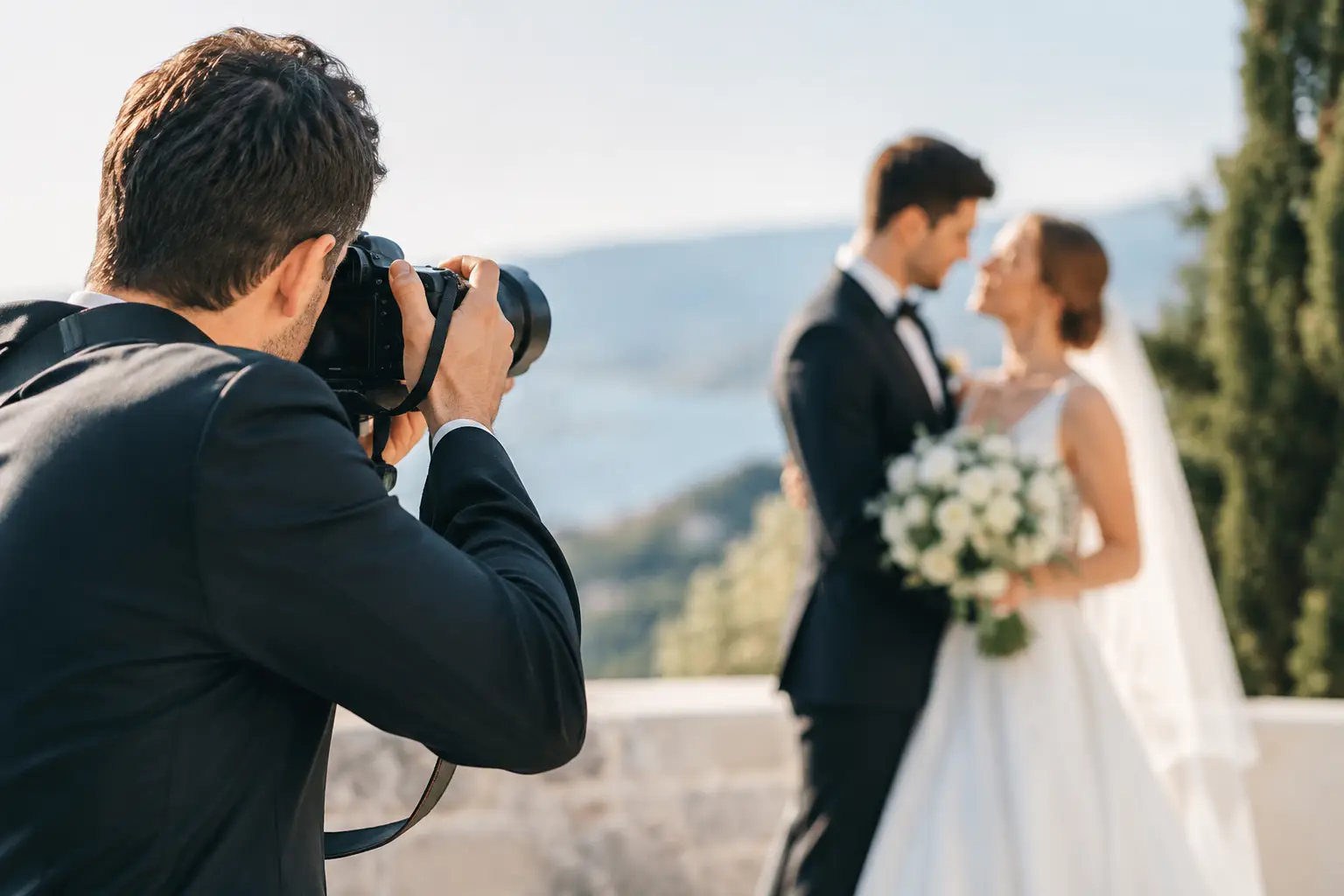
Wedding timelines move quickly, and couples should not spend their entire cocktail hour learning ten unrelated poses. A professional photographer can create a full gallery of variety by making small changes to one successful setup.
Start with the couple facing one another. Capture them looking at each other, then looking toward the camera. Ask them to touch foreheads, share a kiss, and then pull back just enough to smile. Photograph a close-up of hands and rings, then step wider to include the venue, flowers, or dramatic sky.
From that same position, ask one partner to look away while the other looks at them. This creates a more editorial portrait without losing the warmth of the moment. Turn the couple slightly, change the camera angle, or have them walk a few steps. Those subtle variations provide a balanced collection of classic portraits, modern images, and candid-feeling moments.
Remember the Dress, Veil, and Jacket
Wedding attire is part of the story, so pose with it in mind. Before the camera starts, smooth the dress, check the train, straighten the jacket, and make sure a bouquet is held at a flattering height. These small adjustments protect the polished look couples have invested so much in.
A veil can frame a couple beautifully when it is placed intentionally, but it should not cover faces or distract from their expressions. A long train may look elegant flowing behind the couple in a wide shot, while a closer portrait may call for a cleaner arrangement. For grooms and partners in suits, a buttoned jacket, centered tie, and empty pockets usually photograph best.
Make Room for Candid Movement
The most memorable wedding galleries need both polished portraits and images that feel spontaneous. After a few guided poses, encourage movement. Walking, turning, cuddling, dancing slowly, or sharing a quiet laugh helps couples release tension.
Movement also gives photographers a chance to capture natural details: a dress moving in the breeze, hands finding each other, a glance exchanged after a kiss. These are the images that often feel most personal years later because they preserve how the day felt, not only how it looked.
There is a trade-off. Movement creates authenticity, but it can make details less controlled. That is why a strong portrait session includes both. Begin with the clean, classic photographs parents and grandparents will love. Then loosen the direction so the couple has space to create their own memories in front of the camera.
Plan Enough Time to Avoid Rushed Portraits
Even the best posing guidance cannot fully overcome a rushed timeline. Couples do not need hours of portraits, but they do need a protected window away from guests, phones, and last-minute questions. Twenty to thirty focused minutes can produce meaningful results when the photographer has a clear plan and the couple knows what to expect.
If the wedding day schedule is tight, consider a first look or set aside a few minutes after the ceremony and near sunset. Golden-hour portraits can be especially soft and romantic, but the timing depends on the season, venue layout, and weather. A dependable photography team will adapt while keeping the experience calm.
At Adorable Times Photography, decades of wedding experience help our team guide couples with confidence while preserving the genuine emotion that makes each celebration one of a kind. Professional direction should feel supportive, never demanding, and it should leave couples free to enjoy their day.
The best advice is simple: do not try to look perfect. Stand close, trust the direction, and focus on the person you chose to marry. When that connection leads the portrait session, the photographs become more than beautiful images – they become a return to the feeling of the day itself.