

The night before a family session, most people do not worry about the camera first. They worry about the closet. If you are asking what to wear family photoshoot day, you are not overthinking it. Clothing shapes how your images feel for years to come, and the right choices help your family look coordinated, comfortable, and genuinely like yourselves.
A great family portrait does not start with matching white shirts and jeans anymore. It starts with balance. You want outfits that work together without looking stiff, colors that flatter every person in the frame, and pieces that let kids move, parents relax, and everyone feel confident. When that happens, the photos look natural instead of forced.
What to wear family photoshoot sessions for a timeless look
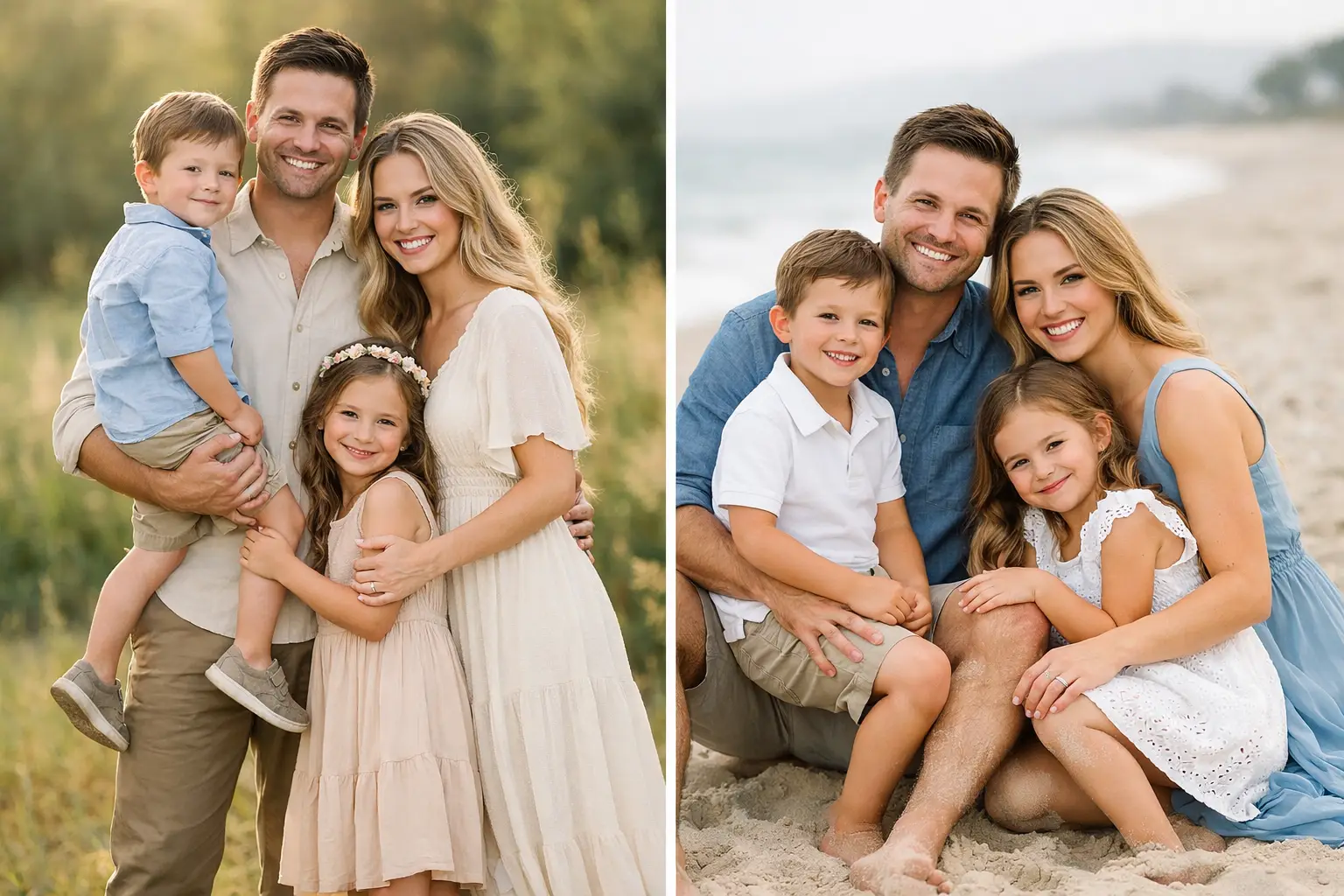
The simplest way to plan outfits is to think in color families, not identical clothes. Choose two or three main colors and build around them with softer supporting tones. Neutrals like cream, beige, soft gray, navy, olive, and muted blue photograph beautifully because they do not distract from faces and connection.
If one person wears a patterned outfit, let that pattern guide everyone else. A floral dress with dusty blue and soft pink can inspire shirts, sweaters, or accessories in those same shades. This creates harmony without making everyone look copied and pasted.
Timeless photos usually come from tones that feel soft and classic rather than loud or trendy. Bright neon colors, heavy logos, and bold graphics pull attention away from emotion. They also date photos quickly. A family portrait should still feel beautiful years from now, even after styles change.
That said, timeless does not have to mean boring. Texture can do a lot of the work that bright color does. Knit sweaters, linen dresses, corduroy, denim jackets, and layered fabrics add depth and warmth on camera. These details help portraits feel rich and polished without looking overstyled.
Start with one outfit, then build the group
Many families get stuck because they try to plan for everyone at once. A much easier approach is to start with one key outfit, usually mom’s dress or a child’s statement piece, and build around it. Once you have one strong anchor, the rest of the palette becomes much easier.
For example, if the anchor is a soft sage dress, other family members can wear cream, tan, light blue, or deeper green. If the anchor is a navy shirt, you can bring in khaki, ivory, rust, or soft gray. This keeps the group coordinated without making anyone look too uniform.
There is also a practical reason this works. In many portraits, the eye goes first to the center of the frame or to the person with the most visual presence. Starting with the most important or most visible outfit helps the entire image feel intentional.
The best colors for family portraits
Some colors consistently photograph well in outdoor and studio settings. Earth tones are especially dependable because they work in every season and flatter many skin tones. Cream, camel, rust, olive, dusty blue, mauve, and soft mustard can all look beautiful when used carefully.
Jewel tones can also work well, especially in fall or winter. Deep emerald, burgundy, navy, and plum feel elegant and rich. They add depth without becoming distracting. If your session is more formal or taken indoors, these tones often create a refined look.
Black can be flattering, but it depends on the setting and the group. In a light, airy field at sunset, too much black can feel heavy. In an urban session or a more formal indoor portrait, black can look classic. White is similar. It can be crisp and clean, but very bright white may reflect light strongly or feel stark if everyone is wearing it.
The safest route is usually softened color rather than extremes. Think cream instead of stark white, charcoal instead of true black, and muted tones instead of very saturated shades.
What to avoid when deciding what to wear family photoshoot day
There are a few common choices that create problems on camera. The first is dressing everyone in the exact same outfit. Matching can feel dated and flat. Coordinating creates a much more polished result.
The second is too many competing patterns. One or two subtle patterns can look great, but five different prints in one frame usually feel chaotic. If someone wears plaid, floral, or stripes, keep the others mostly in solids or very quiet textures.
The third is wearing clothes that need constant adjusting. Very short hems, shirts that gape, stiff jackets, or shoes that hurt will show up in posture and expression. Comfort matters more than many people expect. If your child is tugging at a collar or you are worried about your dress the whole time, that tension will appear in the final gallery.
Try to avoid trendy pieces that may look dated quickly. This does not mean you cannot be stylish. It simply means your family photos are usually strongest when the style feels clean and lasting rather than tied to one short-lived moment in fashion.
Dress for the season and location
The best outfit plan always depends on where the session takes place. A beach photoshoot calls for a different look than a downtown city session or a fall park portrait in New Jersey, New York, or Pennsylvania.
For spring, lighter colors and softer fabrics work well. Think flowing dresses, lightweight button-downs, and layers that feel fresh without being bulky. Spring weather can be unpredictable in the Northeast, so an added cardigan or light jacket in a coordinating tone can help.
For summer, breathable fabrics are key. Linen, cotton, and relaxed silhouettes tend to photograph well and keep everyone comfortable. Very dark colors can show heat quickly, especially with young children, so lighter and mid-tone palettes often make more sense.
Fall is one of the most popular seasons for family portraits because the colors are naturally rich. This is when rust, cream, camel, forest green, navy, and burgundy really shine. Layers also add visual interest. Sweaters, boots, scarves, and textured dresses can make a fall gallery feel especially warm and memorable.
Winter sessions can be stunning, but they require a little extra planning. Choose coats and outer layers carefully if they will be in the photos. A polished wool coat looks much better than a random puffer grabbed on the way out. If the session is indoors, you have more flexibility, but rich fabrics and deeper tones often suit the season beautifully.
How to dress kids without making it stressful
Children photograph best when they feel like themselves. That means their outfit should be comfortable, age-appropriate, and easy to move in. A child who can run, sit, cuddle, and play comfortably will almost always give better expressions than one who feels restricted.
For younger kids, simple is best. Avoid itchy fabrics, oversized bows that need constant fixing, and shoes they are not used to wearing. If a toddler melts down every time a hat goes on, the hat is not worth it.
It also helps to think about movement. Dresses that twirl lightly, suspenders that fit properly, soft sweaters, and neat but comfortable shoes all work well. These little details keep the look polished while allowing natural interaction.
If siblings are being photographed together, coordinate their outfits with similar tones and levels of formality. One child in a formal outfit and another in very casual clothes can look uneven unless that contrast is intentional.
Parents should not disappear into the background
Moms and dads sometimes focus so much on dressing the kids that they leave themselves for last. In the final images, though, parents set the tone. Choose outfits that fit well, flatter your shape, and make you feel comfortable standing, sitting, and holding children.
For moms, dresses often photograph beautifully because they create shape and movement, but a great sweater with tailored pants can look just as strong. For dads, a well-fitted henley, button-down, or sweater in a coordinated color usually works better than anything too formal or too loose.
Think about the overall level of dressiness. Everyone does not need to be formal, but the family should feel visually consistent. If one person looks ready for a holiday card and another looks ready for the grocery store, the photo can feel off.
Small details matter more than people expect
Shoes, accessories, and grooming can quietly improve or weaken the whole look. Shoes should coordinate with the outfit and setting, even if they are not featured prominently. Athletic sneakers, worn flip-flops, or bright shoes can distract more than expected.
Accessories should support the portrait, not compete with it. Delicate jewelry, a simple hair ribbon, or a textured hat can work well. Large statement pieces or anything that feels too trendy may pull attention from faces.
This is also a good time to think about practical prep. Steam clothes ahead of time. Remove phones and bulky keys from pockets. Make sure children’s socks, undershirts, and hair accessories coordinate if they might be visible. These details seem small until they appear in every frame.
At Adorable Times Photography, we have seen how the right wardrobe choices help families relax and enjoy the experience instead of second-guessing every photo. When clothing feels thoughtful but effortless, the emotion comes through first, and that is what makes a portrait last.
If you are still unsure, choose coordination over matching, comfort over trends, and colors that let your family’s connection stay at the center. The best outfit is the one that helps you walk into your session feeling ready to be present with the people who matter most.


Pingback: How to Schedule Family Portraits Without Stress - Adorable Times Photography